
Frequently asked questions.
How much gravel do I need?
Check out our handy volume calculator - simply enter your project dimensions, and it will calculate your required volume for you!
For your convenience this calculator utilizes a compaction factor of 1.20 by default, which is a good starting point for most materials. For shale, a compaction factor of 1.3 should be used. This value can be changed to reflect any compaction factor you choose, and is intended simply as a guide.
What kind of gravel should I use on my road or driveway?
The answer for to this question will be depend on your situation. If you already have an established base layer, you can likely spread 3/4” crush ontop for light traffic; however for heavier traffic, 1” crush may stand up better. If you have soft spots, 1 1/2” crush can help to firm them up. We would be happy to discuss your project and help you to pick the product that will best suit your needs.
Should I use crushed gravel or uncrushed gravel?
Fracture plays a large role in the way that gravel compacts to form a hard surface - round rock is able to move around, whereas fractured rock will lock together. Crushed (fractured) gravel will make for a better road, but there are times where uncrushed gravel is required - such as drain rock, where water needs to be able to flow through the rock and away from something. It is important to consult your local building codes or engineering requirements to ensure you are ordering the proper material for your project.
How to make my gravel last longer?
A proper slope on a pad or crown on a road will ensure your gravel surface is able to shed water, which will in turn aid in longevity. Re-gravelling before the road or pad punches through will also aid in keeping long term maintenance costs down.
What happened to all my gravel?
Traffic travelling over your gravel causes the rocks to grind together under the weight of the load, slowly wearing them down, and over time you are essentially left with sand. Depending on your location, it may be economical to purchase a harder gravel that will last longer.
If you had a lot of un-fractured rock in your gravel, this could have also allowed the gravel to be pushed down over time as round rock will not resist movement like a fractured rock will.
What should I do to prepare for a gravel delivery?
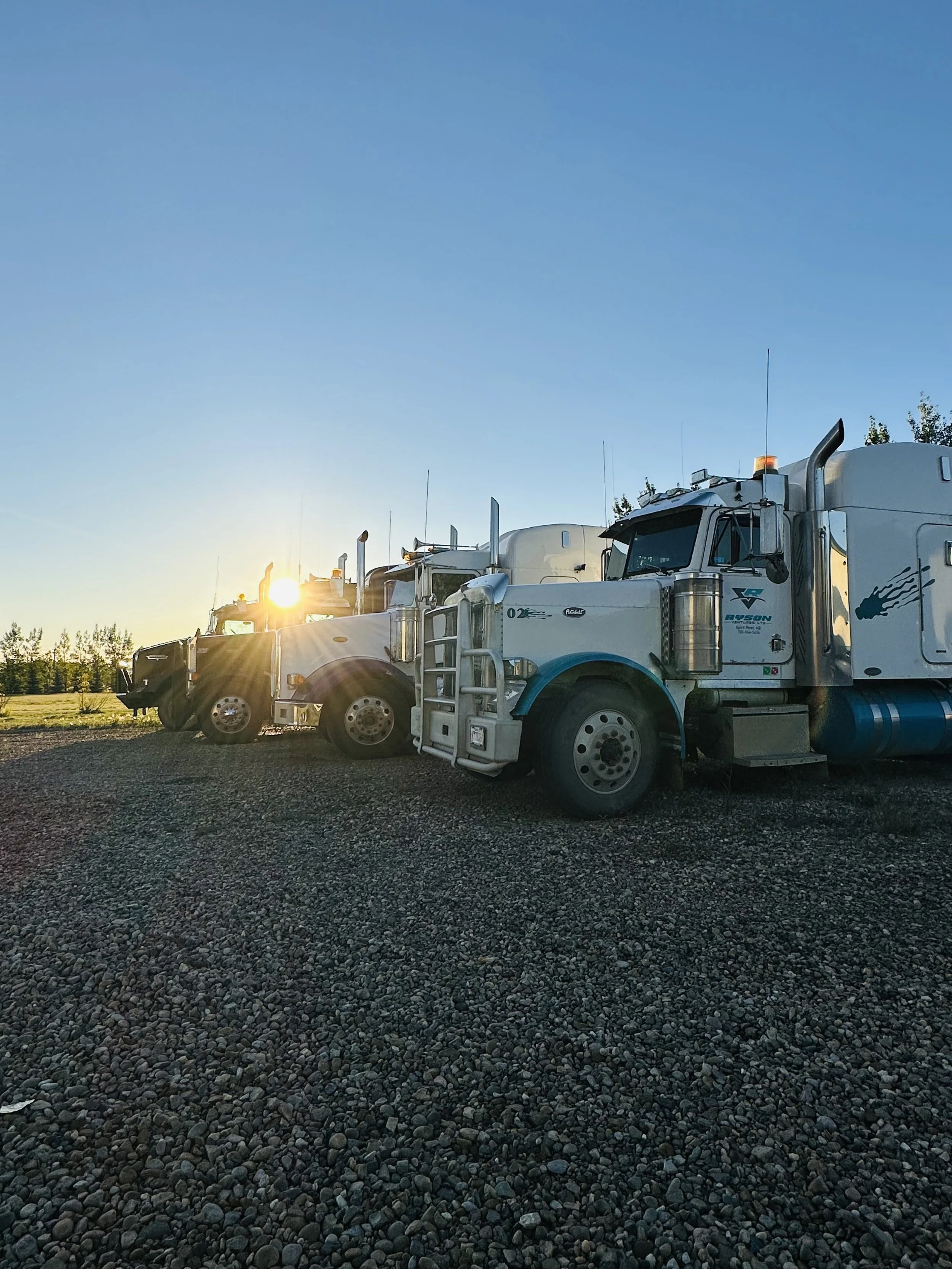
Your material will be delivered by a very large and very heavy truck, often 6 times as long, 4-5 times as tall, and 30 times as heavy as the average car - ensure your delivery location can accommodate this.
Your delivery site should be free of trees or other obstacles hanging over the driveway and workspace, and should allow adequate space for the truck to offload and get turned around. Trucks require firm and fairly level ground on which to navigate, and a work area free of overhead power lines.
Ideally you will be present at the time of delivery to provide clear instruction to the driver. Alternatively, prior arrangements should be made including clear instructions as well as marking the drop location. Pets and children should be kept away from the work area.